Help me choose where to start
Four ways in, depending on whether you are curious, have a diagnosis, need support or are helping someone else.
Interactive demonstrations, 26 plain-English condition guides and a support directory for all four UK nations. Every page links to the official source behind the text.
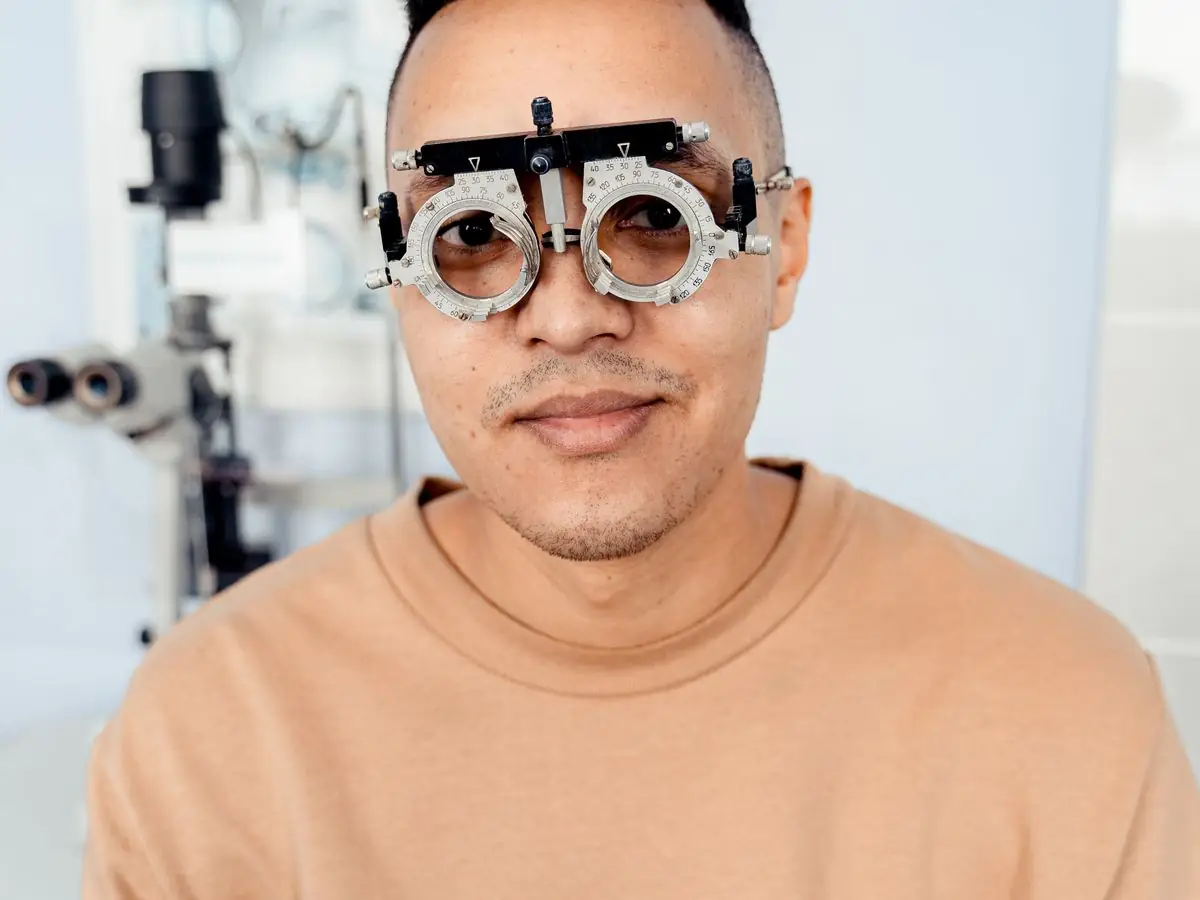
Four ways in, depending on whether you are curious, have a diagnosis, need support or are helping someone else.
Who to contact for sudden sight loss, pain, flashes, floaters and new double vision.
Read what the name means, what changes in daily life and what to ask at your appointment.
Hospital eye services and sight-loss charities across 12 UK areas.
Compare the main types and see what makes everyday information easier to read.
Compare an ordinary street, a living room and a page of text with 13 visual effects and 26 named conditions. Change one thing at a time and see what happens.
OpenSeven short experiments on focus, contrast, side vision, light, colour, depth and the retina. Each one links to the conditions where the idea matters.
OpenPlain-English guides with everyday examples, a question to take to your appointment and the official source for every page.
OpenUrgent help, NHS eye care in each nation, local services and charities you can call.
OpenProtan, deutan and tritan models on the same travel board, with and without labels.
Three teaching pictures of one living room.
Two conditions side by side, with the parts of vision each one involves.
Guides, labs, glossary terms, charities and areas in one search.
If you suddenly cannot see from one or both eyes, or you have sudden severe eye pain, call 999 or go to A&E. New flashes, floaters, a shadow or sudden blur need an urgent optometrist appointment or NHS 111 the same day.
For most problems, an optometrist (at an opticians) is quicker to see than a GP and can refer you to hospital. A pharmacist can help with dry, gritty or crusty eyes.
In England you qualify if you are under 16, aged 16 to 18 in full-time education, 60 or over, have diabetes or glaucoma, or meet other criteria. Scotland offers free NHS eye examinations to everyone who usually lives in the UK. Wales and Northern Ireland have their own rules.
No. They show one visual idea at a time on a screen. Real sight varies with the person, the task, the lighting and the day. Ask the person what helps them.
Every guide links to its NHS, hospital or charity source. All links were checked on 4 October 2026. The site is funded by Medstack Ltd and carries no advertising. The site has not yet been clinically reviewed.
Sharpness is only part of sight. The labs cover contrast, side vision, light, colour, depth and how the retina works.
Focus and refraction
The cornea and lens bend light towards the retina. See what happens when the focus and the back of the eye do not line up.
LabDetail and contrast
Small detail and low contrast are different demands on vision. Change one at a time to see why a letter chart cannot describe every part of useful sight.
LabCentral and side vision
Central vision handles fine detail. Side vision is the surrounding view. Compare the same scene with a central patch and with the outer field restricted.
LabLight and glare
A direct reflection can wash out detail. Explore the difference between how much light there is and where the light falls.
LabColour and information
Colour vision differences usually affect particular colour pairs. Labels, symbols and patterns make information readable without relying on colour.
LabTwo eyes and depth
Each eye has a slightly different view. The brain uses the difference, along with other clues, to judge depth.
LabRods and cones
Explore the different contributions of light-sensitive cells and the terminology of inherited retinal conditions.
LabSight tests, screening, children, eye drops, registration and surgery, in plain English with the NHS page behind each one.
What the optometrist checks, how long the test takes, what the results mean and how often to go back.
GuideWho is invited, what happens at the appointment, what the result letters mean and why you should still have ordinary sight tests.
GuideThe checks every child gets, the signs to watch for, free glasses and what happens if a problem is found.
GuideA step-by-step method, what to do if you miss a dose, how long bottles last and aids which make drops easier.
GuideHow certification (CVI) and registration work, what the two levels mean and the help registration opens up.
GuideWhen surgery is offered, what the operation involves, recovery, and the questions to ask before you agree.
Guide