Vision, properly
The science of sight, what changes in your teens, and what the myths get wrong.
How seeing works
Light enters through the cornea, passes the pupil, and the lens focuses it onto the retina. Cones in the retina give you colour and detail in good light. Rods give you dim-light and side vision. The optic nerve carries the signals to the brain, which does the actual seeing. Every eye condition on this site affects one of those steps. Tap a part.
Cornea. A clear, curved layer which does most of the eye's focusing. Its shape decides whether you need glasses.
The dotted orange lines are light. They bend at the front and meet at the back.
Why so many people your age need glasses
Short-sightedness (myopia) usually starts between about 6 and 13, and often runs in families. The eye grows slightly too long, so distant things focus in front of the retina instead of on it. More young people have it than a generation ago. The NHS says time outdoors, especially for children, can help stop it getting worse. Some opticians offer specially designed lenses to slow it, though these are not on the NHS yet. If the board has gone blurry, that is a sight test, not a personal failing.
See the room differently
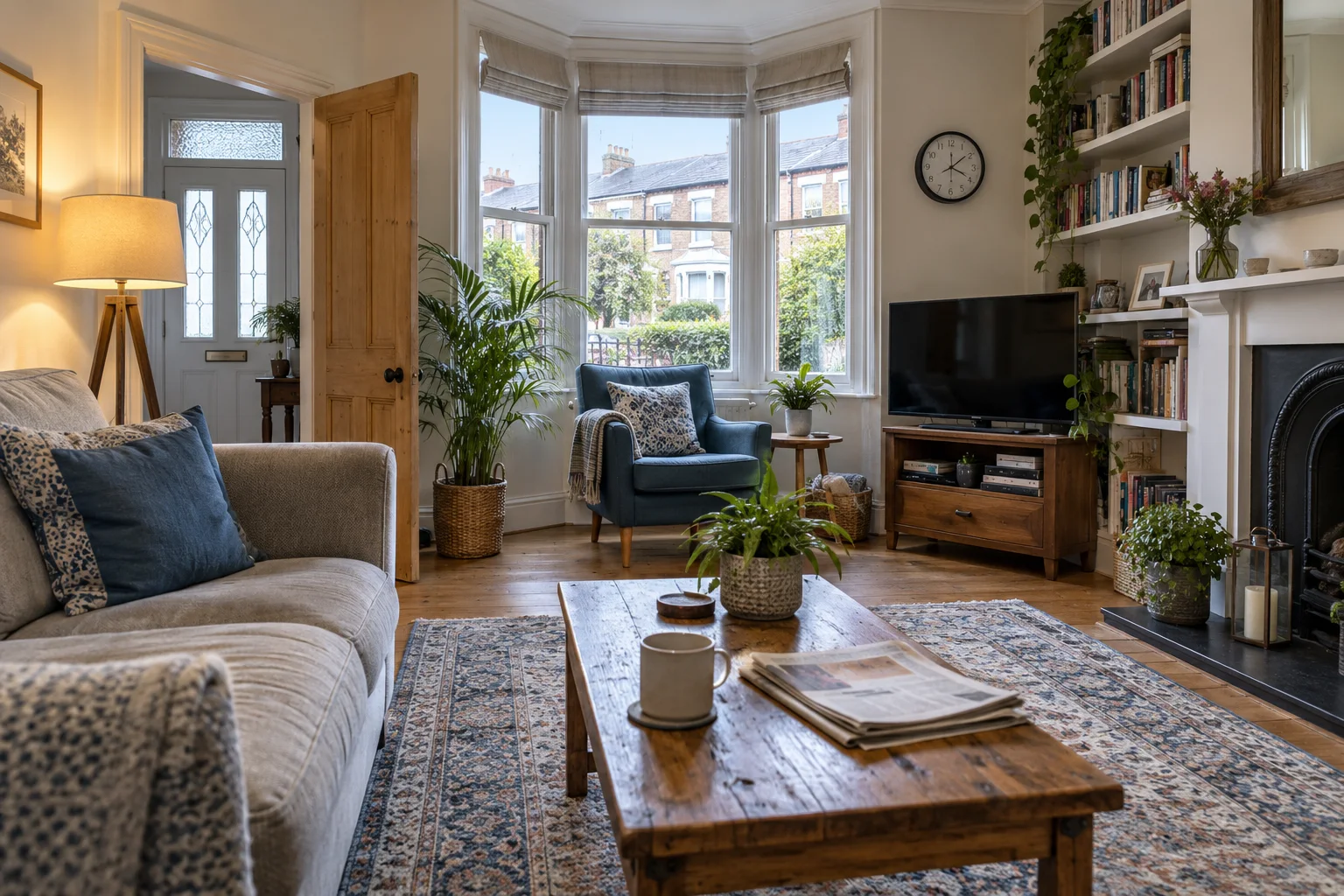
Pick a change, then move the slider. This is a teaching picture, not what any one person sees.
These are teaching effects, not simulations of any one person. The full explorer has 16 effects, 40 conditions and a split view you can drag.
Open the full vision explorerMyth or fact
Reading in dim light damages your eyes.
It tires them and you may get a headache, but it does not cause lasting damage.
Screens give you square eyes or permanent damage.
Screens cause dry, tired eyes because you blink less. Breaks and blinking fix that. There is no evidence of permanent harm.
Colour blindness can stop you doing some jobs.
A few jobs test colour vision, such as pilot, some electrical work and some roles in the armed forces. Most jobs do not. Knowing early helps you plan.
Eye conditions can run in families.
Some retinal conditions, glaucoma and colour vision deficiency are inherited. Tell your optometrist about family history.
Sunglasses are only about comfort.
UV light adds to the lifetime risk of cataracts. Look for the CE or UKCA mark and UV400 on the label.
Sleeping in contact lenses is fine now and then.
Sleeping or swimming in lenses raises the risk of a serious infection. Follow the wearing schedule you were given.
Contact lenses, sport and screens
Contact lenses are fine at your age if an optometrist fits them and you follow the cleaning and wearing rules exactly. Never use tap water on them. Never sleep or swim in them unless told you can.
Sport: racket sports, hockey and anything with a hard ball cause many eye injuries in young people. Polycarbonate sports glasses or goggles stop them. A bruised or cut eye needs same-day advice.
Screens: dry, tired eyes come from staring. Blink, look at something far away every 20 minutes or so, keep the screen a bit below eye level, and get daylight. Night mode is about sleep, not eye damage.
If someone you know is losing their sight
Most people with sight loss see something. Some see the edges but not the middle, some the middle but not the edges, some everything through a haze. Ask what helps rather than guessing. Describe, do not point. Say who you are. Send messages as text rather than screenshots so a screen reader can read them. Being treated as normal matters more than being treated carefully.
Free sight tests
NHS sight tests are free for under 16s everywhere in the UK, and in England for 16 to 18 year olds in full-time education. Scotland gives everyone a free NHS eye examination. If you need glasses, an NHS voucher pays some or all of the cost. You do not need a parent to book, but take one if you can, because the optometrist will ask about family history.
Free sight tests in each UK nationWhen to get help, and how fast
Same day, with an adult: sudden blurred or lost vision, a curtain or shadow across your view, new flashes with lots of floaters, double vision, or an eye injury. An adult can call NHS 111, or 999 if sight goes suddenly.
This week: headaches when you read or use a screen, squinting at the board, eyes which are often red, itchy or watery, or colours looking different from how your friends describe them. Book a sight test. Under 16 it is free on the NHS across the UK.
Who to contact and whenWritten for ages 12 to 15. Sources: NHS pages on short-sightedness, colour vision deficiency, contact lens safety and free sight tests, linked from the main guides. Checked 4 October 2026. Educational information, not medical advice.