Eye explorers
How your eyes work, what an eye test checks, and what it is like to see differently.
Your eye is a camera
Light bounces off everything around you and comes into your eye. The front of the eye bends the light. The back of the eye catches it. A nerve carries the signal to your brain, and your brain makes the picture. Tap each part to see what it does.
Cornea. The clear dome at the front of the eye. It bends light inwards to start the focusing.
The dotted orange lines are light. They bend at the front and meet at the back.
Did you know?
About 1 in 12 boys and 1 in 200 girls have colour vision deficiency. Most of them see colours, but some pairs of colours look alike.
The picture on the back of your eye is upside down. Your brain flips it.
Eye tests are free on the NHS until you are 16. You do not need to read letters to have one. Little children match pictures instead.
See the room differently
Pick a change and move the slider. Each one is a bit like an eye condition some people live with.
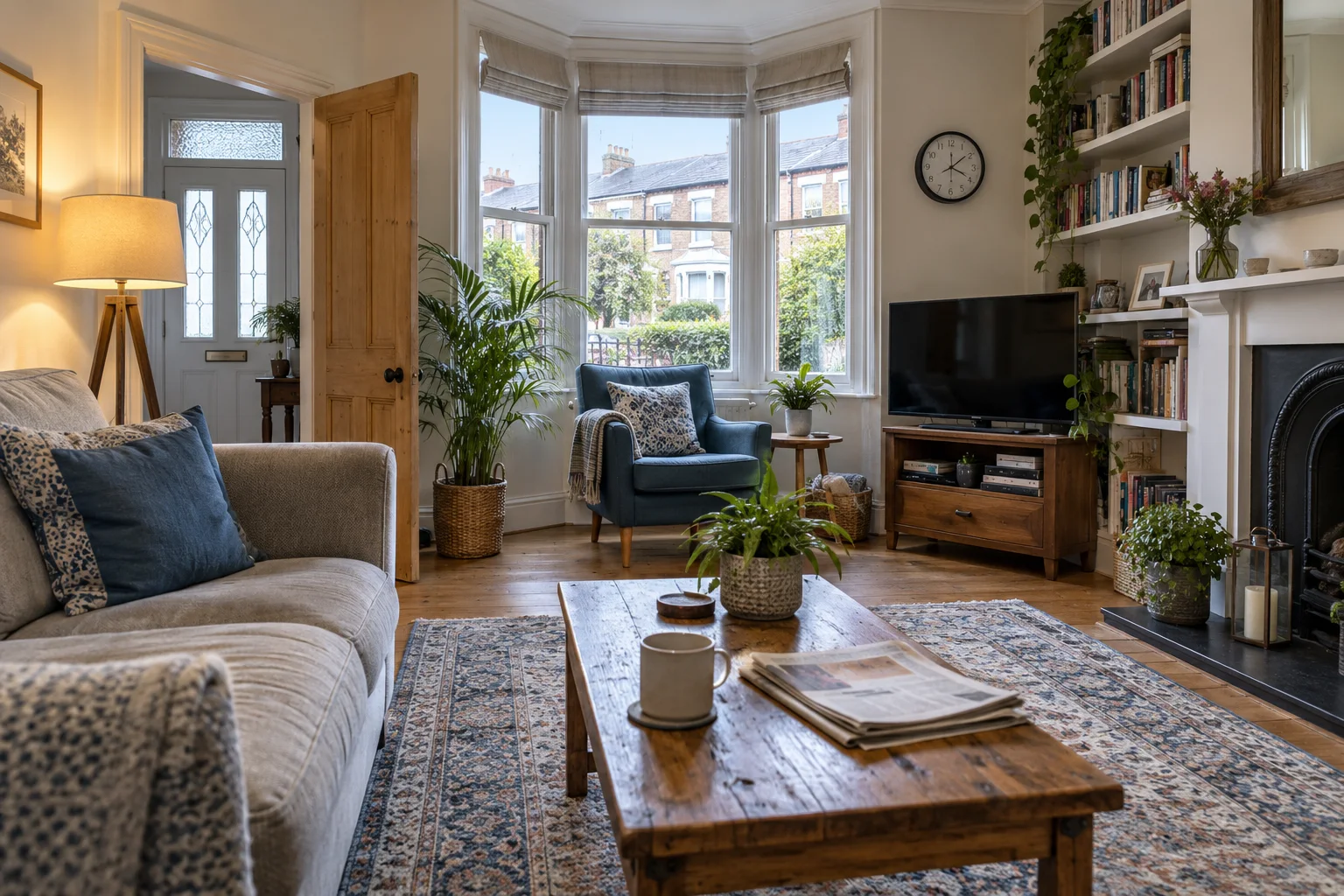
Pick a change, then move the slider. This is a teaching picture, not what any one person sees.
Blurry is what short-sighted people see far away without glasses.
Colour gone is stronger than most colour blindness. Most people with it see colour, but mix up some pairs.
Only the middle is a bit like losing side vision. Middle missing is a bit like losing central vision, which makes faces and reading hard.
What happens at an eye test
- The optometrist asks about your eyes, school and screens.
- You read letters or match pictures on a chart. Getting some wrong is normal, it is how they measure.
- You try lenses in a special frame until the letters look sharpest.
- They shine a light into your eye to check the inside. It is bright but it does not hurt.
- You might get drops which make your pupils big for a few hours. Things look bright and blurry for a bit, then go back to normal.
The whole thing takes about 20 to 30 minutes.
What happens at a sight test, in detailGlasses, patches and screens
Glasses bend light so it lands in the right place on the back of your eye. Wearing them does not make your eyes weaker.
A patch covers the stronger eye so the other one has to work and get better. Doctors use patches while the brain is still learning to see, which is why younger children wear them.
Screens do not damage your eyes, but staring makes you blink less, and your eyes get dry and tired. A tip many optometrists give: every 20 minutes, look at something far away for 20 seconds. Playing outside in daylight is good for growing eyes too.
A friend who sees differently
- Say who you are when you come up to them. Say when you leave.
- Describe things with words, not just "over there". Say "the door on your left".
- Ask before you help. Do not grab an arm. Let them take yours.
- A white cane or a guide dog is working equipment. Do not touch the dog without asking.
- Big text, good light and clear voices help a lot. So does being normal with them.
Quiz: eye explorer
Which part of the eye works like a camera sensor and catches the light?
The retina turns light into signals for the brain.
Why does your pupil get bigger in the dark?
The iris opens the pupil to catch more light.
Do glasses make your eyes weaker?
Glasses bend light so it focuses properly. They do not change the eye.
Most people with colour blindness...
Black-and-white vision is rare. Most mix up colours like red and green.
A friend uses a white cane. You want to help. What first?
Ask first. If they say yes, let them take your arm.
When to tell someone
- Your eyes hurt or go red.
- Things look blurry, double or wobbly.
- You get headaches when you read or look at the board.
- You see flashes, or a dark patch comes over part of your view.
Tell a parent, carer or teacher the same day. A sudden change needs a grown-up to call for advice straight away.
Written for ages 8 to 11. Sources: NHS pages on children's eye tests and colour vision deficiency, linked from the main guides. Checked 4 October 2026.